How to Grow Café au Lait Dahlias: A Complete Care Guide

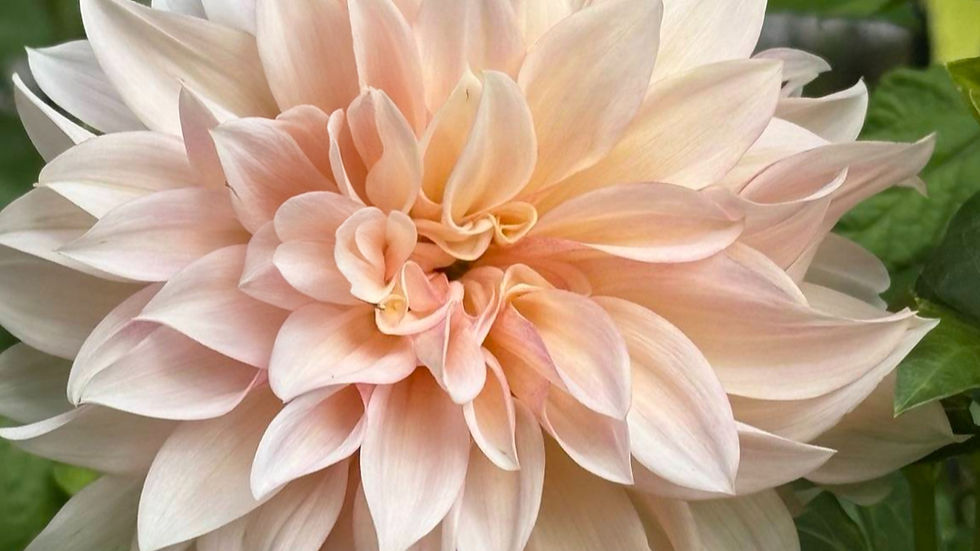
Café au Lait is the dahlia everyone falls in love with. Dreamy blooms in warm shades of blush, cream, and soft peach make this variety an instant favorite in the garden and an absolute showstopper in cut flower arrangements. Plants grow to a full 3–4 feet and produce generously from midsummer deep into fall. Give it a sunny spot and it will reward you all season long. Simply breathtaking.
Growing Café au Lait Dahlias in Rhode Island
If you've been scrolling through flower photos and wondering what that gorgeous creamy-blush dahlia is — it's almost always Café au Lait. This beloved variety has earned a devoted following among gardeners and florists alike, and the good news is it grows beautifully right here in Rhode Island.
This guide is written with Ocean State gardeners in mind, but most of the growing tips apply across New England. If you're gardening outside of Rhode Island, the core advice on planting, care, and growing conditions will still serve you well — just check your local USDA hardiness zone to fine-tune your planting and digging timing for your specific area.
Here's everything you need to get started.
What Makes Café au Lait Special
Café au Lait is a large decorative dahlia with softly layered petals in a signature palette of warm blush, cream, antique peach, and rose — all on the same bloom. No two flowers look exactly alike, which is part of the magic. Blooms regularly reach 6–8 inches across, and plants stretch to a full 3–4 feet tall by midsummer.
It's equally at home in a garden border or a mason jar on your kitchen table.
Growing Zones
Café au Lait thrives as a perennial in USDA Zones 8–11, where tubers can stay in the ground year-round. In cooler climates, it's grown as a seasonal plant, and that's perfectly fine.
Rhode Island falls in USDA Hardiness Zones 6b–7b, depending on where you are in the state. That means our winters are too cold to leave tubers in the ground, but our summers are absolutely ideal for growing big, beautiful dahlias. With a little end-of-season care (more on that below), you can lift and store your tubers each fall and replant them year after year.

Rhode Island Growing Zones: What Dahlia Growers Need to Know
Rhode Island may be the smallest state, but it has real climate variation. According to the 2023 USDA Plant Hardiness Zone Map, most of Rhode Island falls between zones 6b and 7b — a meaningful update from the older 2012 map, which classified much of the state as cooler.
For dahlia growers, here's what that looks like in practice:
Northwest inland areas (Foster, Glocester, Burrillville): Zone 6b, the coldest part of the state. Expect a slightly shorter growing window and plan to dig tubers on the earlier end of fall.
Providence metro & Cranston corridor: Zones 6b–7a, urban warmth extends the season a bit. Great conditions for dahlias with a little extra time on either end.
Central RI / I-95 corridor (Johnston, West Warwick): Zones 6b–7a, solid dahlia-growing territory with four full seasons.
South County & Narragansett Bay coast (Narragansett, North Kingstown, Westerly): Zone 7a, milder winters and a longer frost-free season. Some of the best dahlia-growing conditions in the state.
Newport & coastal islands: Zones 7a–7b, the mildest corner of Rhode Island. Tubers can sometimes overwinter with heavy mulching, though digging is still the safest bet.
Bottom line for dahlia growers: Wherever you are in Rhode Island, you're in workable dahlia territory. The main variable is timing, coastal and southern growers get a slightly longer season on both ends, while inland gardeners in zone 6b should be conservative about planting before Memorial Day and diligent about digging before hard frost.
When to Plant
In Rhode Island and greater New England, dahlias should go in the ground after your last frost date and once soil temperatures have warmed to at least 60°F.
Southern Rhode Island / coastal areas: late April to mid-May
Northern Rhode Island / inland areas: mid-May to early June
When in doubt, wait. A tuber sitting in cold, wet soil is more likely to rot than to sprout. If you're eager to get a jump on the season, starting your Café au Lait tubers indoors is a great option — and it's easier than it sounds.
Starting Café au Lait Dahlias Indoors: A Beginner's Guide

Starting your Café au Lait tubers indoors 4–6 weeks before your target planting date gives you a head start on the season and lets you skip the anxious waiting game of wondering if anything is happening underground. Given how large and showy Café au Lait blooms get, that extra few weeks of lead time can translate directly into earlier flowers.
What pot size to use
For indoor starting, you don't need much space, the goal is simply to wake the tuber up and get it ready for the ground or a grow bag, not to grow it to maturity indoors.
Single tubers: A 4-inch pot is sufficient. It provides just enough soil volume to retain a little moisture without staying wet long enough to cause rot.
Tuber clumps: Step up to a 6-inch pot to accommodate the wider mass.
One thing to keep in mind with Café au Lait specifically, this variety can produce large tubers. If yours is on the bigger side and feels crowded in a 4-inch pot, size up to a 6-inch rather than forcing it. A tuber crammed into a too-small pot won't sit properly and can affect sprouting.
Since the goal here is transplanting, either into the ground or into a grow bag, there's no need to pot up beyond this. Get your sprout going, harden it off, and move it to its permanent home.
What soil to use

Use a light, well-draining potting mix — not garden soil or dense potting mixes marketed for moisture retention. Look for something labeled for seed starting or seedlings. Two solid options you can commonly find at local garden centers are Jiffy Organic Seed Starting Mix and Coast of Maine Organic Seed Starter, the latter being especially easy to track down at New England garden centers.
Better yet, mix your chosen seed starting medium with 20–30% perlite to further improve drainage and airflow around the tuber.
Café au Lait doesn't need fertilizer in the soil at this stage. Hold off on feeding until the plant has a few sets of leaves and is actively growing.
Heated mats

This is probably the single most useful tool for getting your Café au Lait off to a strong start indoors. Dahlia tubers wake up much more reliably in warm soil — ideally 65–70°F at the root zone.
Place a seedling heat mat under your pots to keep soil temperatures consistent. Most standard heat mats raise soil temp about 10–20°F above ambient room temperature, so they work well even in a cool basement or garage. If you want more precision, pair the mat with a thermostat controller (inexpensive on Amazon) to dial in the exact temperature and avoid overheating.
Grow lights

Once your Café au Lait sprouts, it needs strong light — a sunny windowsill usually isn't enough, especially in early spring in New England when day length is still short and light angles are low. Weak light at this stage leads to leggy, stretched stems that struggle once they move outside.
A basic full-spectrum LED grow light works well and doesn't need to be expensive. Look for one marketed for seedlings or vegetables. Key settings:
Distance: Keep the light 4–6 inches above the tops of the plants and raise it as your Café au Lait grows. Too far away and stems will stretch reaching for the light.
Duration: Run lights for 14–16 hours per day. A simple outlet timer takes the guesswork out of this entirely.
You don't need grow lights before sprouts appear — the tuber doesn't photosynthesize. But have them ready to go the moment you see green.
Watering & general care
This is where most beginners go wrong with Café au Lait — overwatering before the plant is established.
Before sprouting: Water lightly just once at planting to settle the soil, then hold off. Check the soil every few days; it should feel barely damp, not wet. In a well-draining seed starting mix with a heat mat underneath, you likely won't need to water again for 1–2 weeks.
After sprouting: Once you see your Café au Lait emerging, water when the top inch of soil feels dry. Keep in mind that 4 and 6-inch pots are small and will dry out faster than larger containers — check them every day or two once the plant is actively growing, and always let the soil guide you rather than watering on a fixed schedule.
No fertilizer yet: Wait until your plant has 3–4 sets of true leaves before introducing any feeding.
Hardening off before transplanting

Before moving your Café au Lait outside, give it a 7–10 day hardening off period. Start by setting the pot outside in a sheltered, partly shaded spot for a few hours a day, gradually increasing outdoor time and sun exposure each day. Skipping this step can shock a plant that has only known the cozy indoors — and after all the work of getting it started, that's worth avoiding.
Planting Depth & Spacing
Planting depth: Set tubers 4–6 inches deep, with the eye (the small bud on the crown of the tuber) facing up.
Spacing: Leave 18–24 inches between tubers. Dahlias like airflow, good spacing helps prevent powdery mildew, which can be an issue in our humid New England summers.
Plant in a hole wide enough to lay the tuber on its side comfortably. Don't water heavily right after planting, wait until you see sprouts emerging before establishing a regular watering routine.
Sunlight

Café au Lait is a full/direct sun dahlia. Aim for at least 6–8 hours of direct sunlight per day. More sun generally means more blooms and stronger stems.
Partial sun (4–6 hours) is workable, but expect fewer flowers and somewhat leggier growth. Avoid spots with less than 4 hours — it won't perform well.
Bloom Color & How Sun Affects It

One of the most delightful quirks of Café au Lait is how much its color can shift across the season — and even across individual blooms.
In peak summer heat and strong sun, blooms tend toward warm peachy-cream and soft gold tones. As temperatures cool in late summer and fall, the same plant often shifts toward deeper rose, dusty mauve, and antique blush. Even light levels play a role — blooms on shadier stems can appear paler or more ivory than those in full sun.
This variability isn't a flaw — it's the whole point. A single plant can produce a full bouquet's worth of tonal variation across a season.
When to Expect Blooms
In Rhode Island, expect your first Café au Lait blooms approximately 8 weeks after planting, which typically means:
First blooms: Mid-July to early August
Peak bloom: August through September
Late season: Continuing right up until the first hard frost, usually mid-to-late October
Regular deadheading (removing spent blooms) keeps the plant producing. The more you cut, the more it grows — so don't be shy.
Growing Café au Lait in a Grow Bag (Balcony & Porch Friendly)

No garden bed? No problem. Café au Lait actually does quite well in containers, and a grow bag on a balcony or porch is a completely viable setup.
What you'll need:
A 15–20 gallon grow bag (fabric bags are ideal — they breathe well and prevent overwatering)
A good quality potting mix amended with perlite for drainage
A sturdy stake or small tomato cage
How to do it:
Fill the grow bag about halfway with your potting mix.
Place the tuber in the center with the eye facing up, 4–6 inches below the surface.
Top up with soil, leaving 2–3 inches of space from the rim for watering.
Position the bag in the sunniest spot you have — south or west-facing is ideal.
Water sparingly until sprouts appear, then water consistently (containers dry out faster than ground soil, so check every 1–2 days in peak summer).
Feed with a low-nitrogen, high-phosphorus fertilizer every 2–3 weeks once the plant is established.
A few container-specific tips:
Go with one tuber per 15-gallon bag — they need room.
Grow bags on pavement or decking can heat up quickly. If summer temps are intense, move the bag to avoid afternoon sun overheating the roots.
You'll likely need to water more frequently than in-ground plants — daily during hot stretches is normal.
At season's end, simply lift the tuber out of the bag for storage.
Container dahlias may produce slightly smaller blooms than in-ground plants, but they can still be absolutely stunning — and the portability is a real advantage.
End of Season Care (Rhode Island Winters)
Since we're in colder zones, tubers need to come out of the ground (or bags) before a hard freeze.
After the first light frost blackens the foliage, cut stems down to about 4–6 inches.
Carefully dig or tip out the tuber clump.
Let them cure in a dry spot for a few days.
Store in a cool, dark, frost-free location (a basement works well) in peat moss, vermiculite, or newspaper.
Replant next spring — and they'll come back even bigger.
Ready to Grow Your Own?
Café au Lait tubers are available through the Rhode Island Dahlia Society's annual tuber sale. It's a great way to get your hands on quality, locally grown stock — and support the society at the same time.
Check our website for this year's sale details and availability.
RSVP to our event to get reminders of when the sale is closer.
Share Your Café au Lait Experience
Every garden is a little different — and some of the best growing advice comes from fellow dahlia enthusiasts right here in Rhode Island and across New England. Have you grown Café au Lait before? We'd love to hear how it performed in your garden. Did your blooms lean more pink in the summer heat? Did you try the grow bag method on a porch or balcony? Have a tip for overwintering tubers in a Zone 6 winter?
Drop a comment below and share your experience, your insight might be exactly what a fellow New England dahlia grower needs to hear.


Comments